In Search Of Paradise: The Evolution Of The Persian Garden

This article shall explore the evolution of the garden from the Achaemenian (6th- 4th centuries BCE) to the Sassanian (3rdcentury BCE-7th century CE) empires. It will delve into how the Great Kings of Iran infused political and religious ideology with arboricultural, horticultural and artistic innovation. Finally, we shall observe how thousands of years of Persian tradition would be taken up and spread across the world in the wake of conquest and cultural renewal, shaping not only the garden but the very notion of an earthly paradise across Eurasia.

Sagalassos: A Classical Archaeologist’s Dream

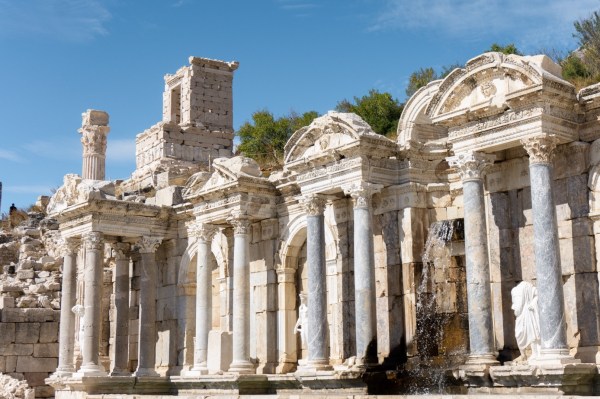
Dominating the western Taurus Mountains, the archaeological site of Sagalassos rises at an altitude of about 1,500 meters. Tracing its origins back to prehistoric times, the town managed to weather numerous upheavals and regime changes up to the Middle Ages, offering modern archaeologists a remarkable wealth of material for understanding the ancient history of Anatolia.

A Siege of Biblical Proportions: The Siege of Lachish (701 BCE)

When Sennacherib ascended the throne in 705 BCE, a wave of revolts swept across the Assyrian Empire, most notably in the Levant, where King Hezekiah of Judah dared to defy the formidable Assyrians. Resolute in his determination to reassert imperial authority, Sennacherib set out to subdue the rebellious lands. Yet before he could turn his attention to Jerusalem, he first had to force his way through a succession of adversaries who awaited him along the road to Judah’s capital. Among these stood the fortified stronghold of Lachish—proud, defiant, and seemingly impregnable. But the resourceful Assyrians conceived a stratagem that at last brought about the city’s fall.

The Persian Thermopylae: The Battle of the Persian Gate (330 BCE)

History is filled with stories of last stands, of small forces engaging an enemy many times their strength for one reason or another. Arguably the most famous last stand took place at Thermopylae where, in 480 BCE, a force of seven thousand Greeks faced off against Xerxes’ army for three days before being overwhelmed. Although it is most certainly a momentous event in history, a very similar military encounter would occur over a century later. This battle contains all of the elements that make last stands such compelling stories. A small force faced off against a much large opponent, desperate to buy the time needed to save their world from destruction, with displays of incredible bravery as well as ingenuity on both sides. And yet, even with all these elements, this battle is rarely remembered alongside the other great last stands of history. This article will go through this story and aims to give it the attention it deserves.

Asian Ionia

In his essay, Joshua Nudell challenges the characterization of the Ionian city-states as outposts of Western civilization, arguing that such a view overlooks their profound indebtedness and connections to Anatolia and beyond.

The Tempel of the Foundation of Heaven and Earth: The Etemenanki 

Visible from miles away arose the crown jewel of Babylon’s cityscape, the Etemenanki, the symbol par excellence of the Mesopotamian city’s undeniable power. Dedicated to the supreme god Marduk, the ziggurat functioned for the Babylonians as the ultimate proof of their might and devotion toward the divine, while for others it symbolized the city’s arrogance. The massive structure firmly imprinted itself into the shared memory of Mesopotamia, the Middle East and even Europe for centuries to come. Unfortunately, age hasn’t been kind to the ziggurat, with nothing more than rubble remaining on the place where once the embodiment of Babylon’s universal aspirations stood. This article wishes to address the monument, its history, significance, and the problems encountered in researching the subject. 

The Struggle for Women’s Education in Qājār Iran: Tradition, Resistance, and Reform

As the modern age dawned in Iran at the end of the Qajar period, women’s education emerged as a central issue, despite heavy resistance from many quarters—ranging from institutions and religious authorities to families themselves. Nevertheless, a determined group of women (and men) pursued the advancement of Iranian society by publishing their criticisms in journals and establishing women’s schools during the twilight of the Qajar era. Join Elaheh Soleimannezhad as she examines this pivotal topic in understanding Iran’s transitional era from the Qajar dynasty to the early Pahlavi period.

Blog at WordPress.com.

Up ↑